

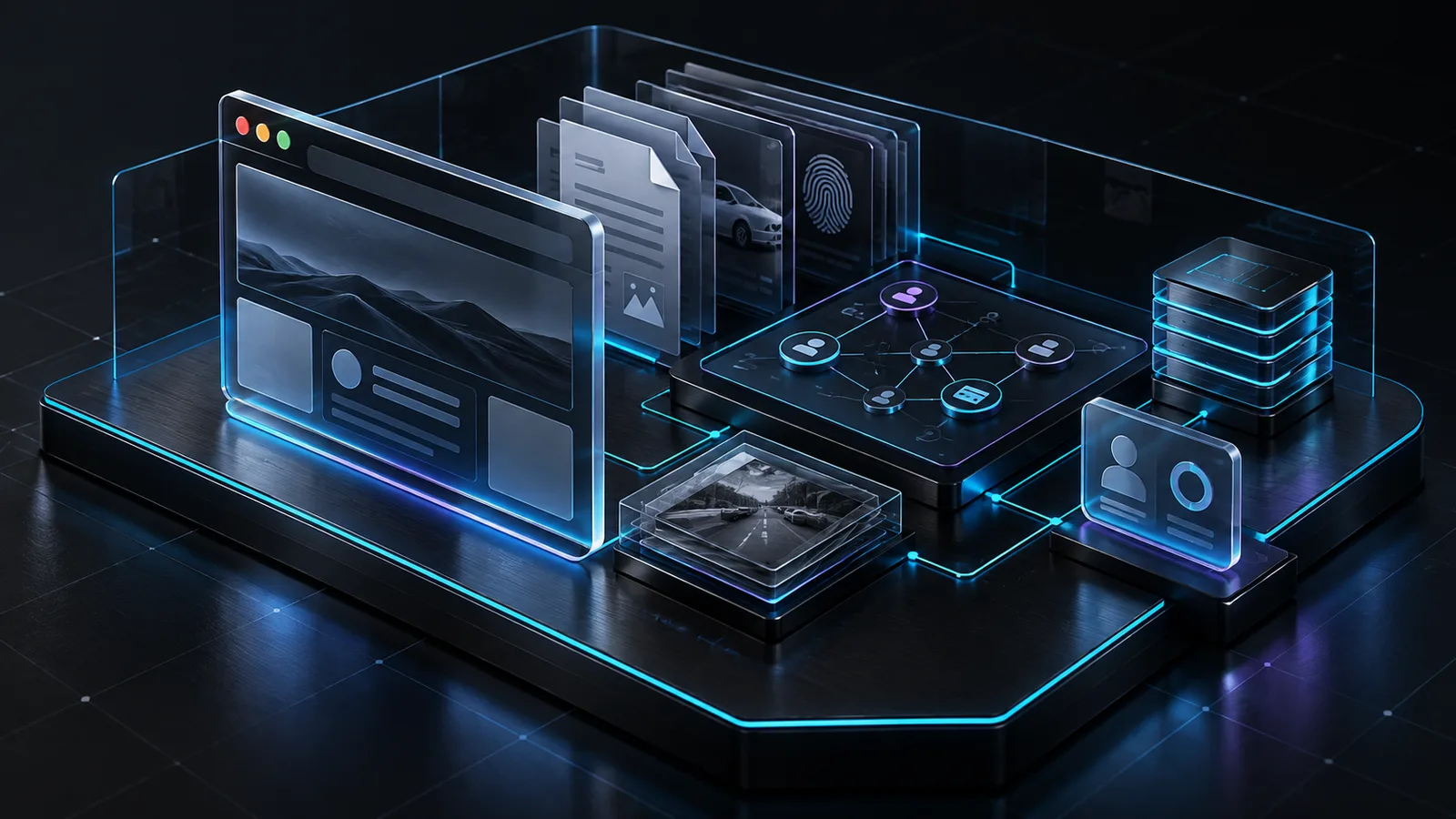
Fraud and financial crime investigations often require analysts to interact with the very infrastructure they are trying to understand: suspicious storefronts, social profiles, payment-related sites, closed communities, leaked data, and suspected criminal services. These interactions can help establish a pattern or connect evidence, but they can also expose the investigator or organization.
A secure browser may be useful for certain web risks. A complete investigation, however, rarely stays inside a browser tab. Analysts may need to manage files, compare records, use multiple applications, collaborate with colleagues, and preserve a clear account of how evidence was collected and handled.
The investigation has several exposure points
The first is identity. Reused accounts, recognizable network characteristics, metadata, and interaction patterns may reveal who is conducting the research. Attribution requirements vary by case, so teams need an explicit approach rather than relying on informal workarounds.
The second is the material being handled. A file or link connected to a suspected fraud operation should not automatically be trusted because it is relevant to a case. Collection, examination, and analysis should occur under controls appropriate to the artifact and the investigation.
The third is evidence integrity. Teams need to know where information came from, what transformations were applied, who accessed it, and what was shared. Unstructured movement between personal devices, temporary accounts, and ad hoc storage makes these questions harder to answer.
Build a workflow from collection to action
A practical fraud investigation workflow can be organized into four stages:
Scope: Define the objective, authorization, identity requirements, exposure tolerance, and evidence-handling rules.
Attribute: Assess how the environment, accounts, network behavior, and interaction patterns could reveal the investigator or organization.
Gather: Collect relevant material in a controlled setting, preserving provenance and documenting important handling steps.
Expose: Before sharing findings or acting on them, determine what can safely be disclosed, escalated, or used for disruption without compromising sources or creating avoidable legal or operational risk.
The stages are a useful checklist, not a substitute for case-specific procedures or legal guidance.
Replace improvised workarounds with governed environments
When every case requires a new burner device or a specially assembled virtual machine, setup and maintenance become part of the investigation burden – or worse, become a blocker to it. A repeatable isolated environment can give analysts a consistent place to access sources, examine files, use relevant tools, and collaborate while remaining separated from primary enterprise assets.
Replica Cyber supports high-risk investigation workflows through full-stack isolated environments designed for intelligence, fraud research, and other sensitive digital operations. The goal is to let the work proceed within defined boundaries, with oversight appropriate to the organization.
What should leaders ask?
Can investigators access the sources required for their cases? Can the team separate risky activity from corporate systems? Can it preserve evidence provenance and review activity? Can approved findings be transferred under policy? Can a new case begin without rebuilding the entire environment?
Those questions connect operational security to investigative effectiveness. The aim is not to add friction to every analyst action. It is to make secure investigation the standard workflow rather than an exception.
Fraud teams need to investigate effectively without turning the investigation into a new source of enterprise risk.
Related reading
Frequently asked questions
- What makes a fraud investigation environment secure?
- It should separate risky activity from enterprise assets, support controlled identity and access, preserve evidence-handling records, and govern how information moves into other systems.
- Why is evidence provenance important in fraud investigations?
- Provenance helps teams explain where information originated and how it was handled, supporting internal review and appropriate downstream use.
- Can a secure browser support every fraud investigation task?
- Not necessarily. Complex investigations may involve desktop applications, files, multiple identities, collaboration, and workflows that extend beyond browsing.