

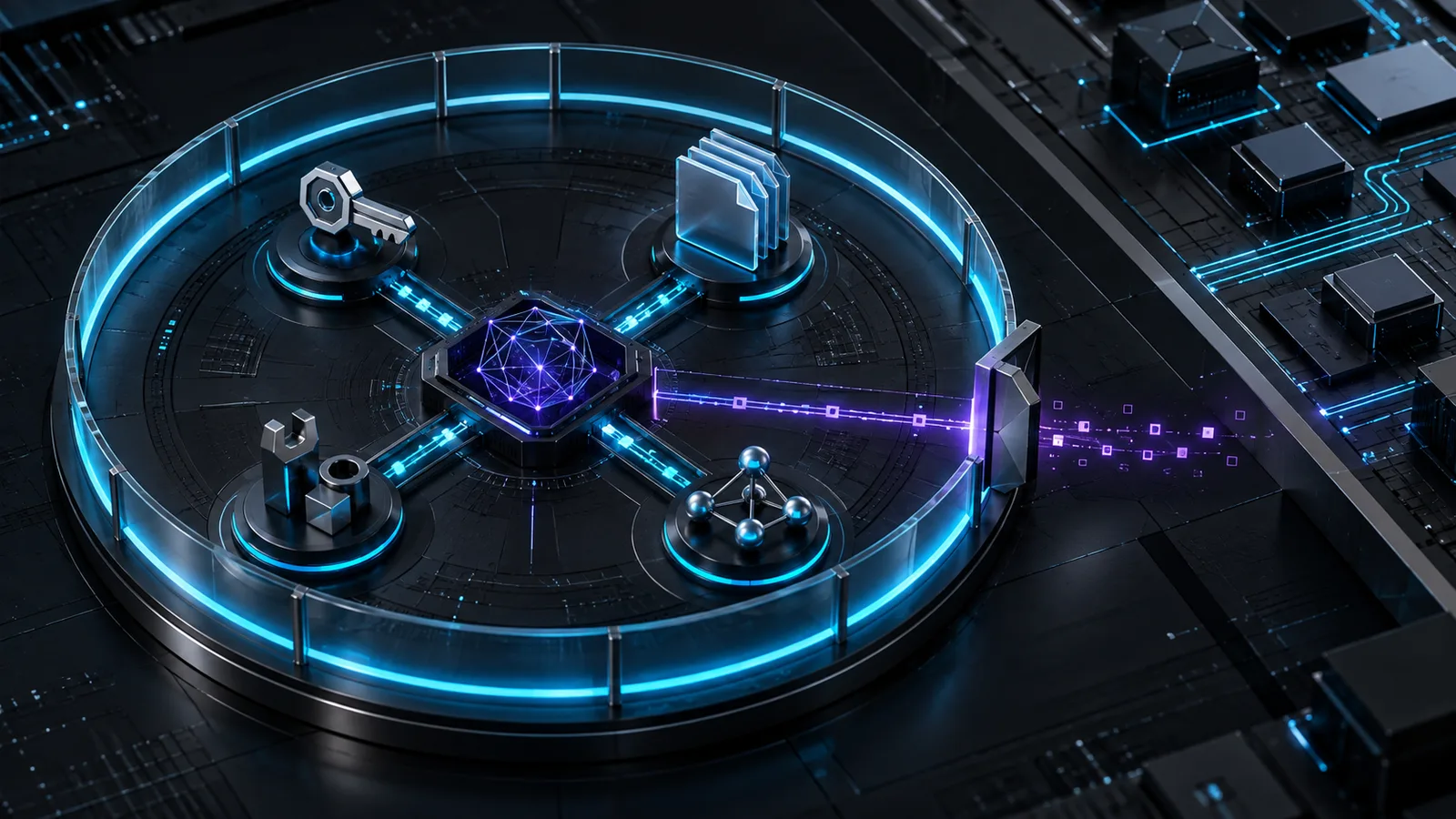
AI agents can do more than generate text. Depending on their configuration, they may call tools, retrieve files, use credentials, interact with applications, or trigger downstream actions. That capability makes testing the whole workflow essential before an agent is given production access.
A useful evaluation asks what the agent can do, what it should do, what happens when it receives untrusted input, and how the organization will detect and contain unintended behavior. This is a practical security exercise, not a prediction that every agent will fail.
Start with a workflow map
Document the agent’s identity, model, tools, integrations, data sources, network access, local state, and permitted actions. Identify which boundaries are enforced technically and which depend on instructions or policy. This map helps teams avoid overlooking access paths that sit outside the prompt itself.
Test four failure categories
Compromised instruction: Can untrusted content redirect the agent or influence its tool use? Test representative hostile documents, web content, or other inputs within an approved environment.
Overreach of permissions: Can the agent use legitimate credentials or integrations to perform an action outside the intended task? Confirm least-privilege access and test denied actions as deliberately as permitted ones.
Environmental escape: Can the workflow reach resources beyond its approved execution boundary, communicate externally, or retain state unexpectedly? Define the boundary and test it.
Failure propagation: Could an action change files, disclose information, or trigger a downstream process? Trace where outputs go and decide what must be reviewed before another system acts on them.
Test containment, not just model behavior
A model can produce an unsafe or incorrect response without causing a major incident if the environment limits what happens next. Conversely, a seemingly reasonable response can create consequences if the agent has broad access and unrestricted ability to act.
For that reason, testing should include both behavior and environment. Establish expected outcomes, observe what the agent attempts, record what the environment permits or blocks, and repeat the test after tightening controls. Measure prevention, containment, observability, evidence collection, and recovery.
Use an isolated environment for meaningful experiments
AI tests are most useful when they resemble the intended workflow. A controlled, isolated environment can let teams evaluate representative tools and data while separating the experiment from primary enterprise systems. Access should still be authorized, and test data should be selected according to organizational policy.
Replica Cyber provides isolated environments intended for high-risk AI experimentation and testing. These environments can form part of a governed path from initial evaluation to a more mature deployment decision.
Define a production gate
Before release, teams should be able to answer: What can the agent touch? Which actions are permitted? What happens when an instruction is compromised? What can it reach outside its environment? What is logged? How can the workflow be stopped, reset, or recovered? Which unresolved risks require explicit acceptance?
The aim is not to make experimentation impossible. It is to produce evidence that helps the organization decide what can safely move forward.
Related reading
Frequently asked questions
- How do you test an AI agent securely?
- Map its identity, tools, data, permissions, network access, and downstream actions; test misuse and failure conditions in a controlled environment; then verify containment and observability.
- Are prompt guardrails enough for agent security?
- Prompts can help shape behavior, but they should not be the only boundary around tools, permissions, data, and execution.
- What is AI containment?
- AI containment means limiting the resources and actions available to an AI workflow and reducing the consequences if it behaves unexpectedly.